Anion Gap Calculator Online for Rapid Serum Analysis
What Is the Anion Gap?
The anion gap is a derived value used to aid the interpretation of serum electrolytes and identify possible abnormalities in acid-base balance. It shows the difference between the main measured positively charged particles and negative ions in the blood. In practical terms, it helps clinicians and patients see whether an unexpected acid is present in the body.
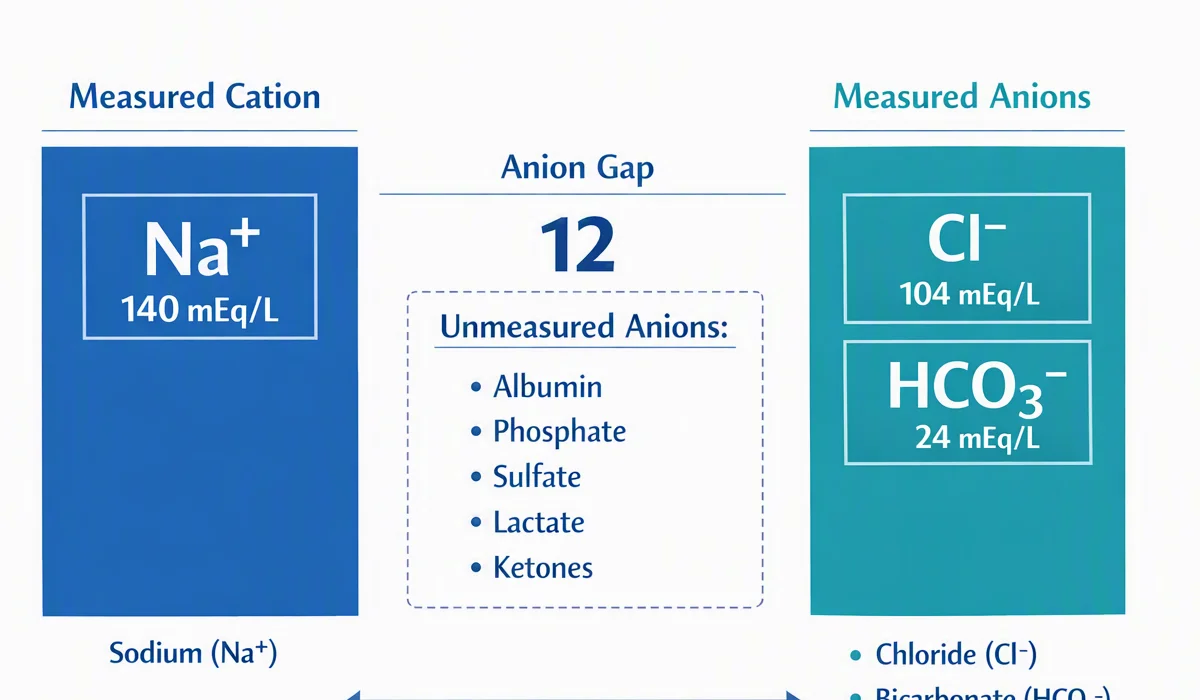
The calculation is based mainly on sodium, chloride, and serum bicarbonate, which are part of a standard serum electrolyte panel. These values come from common blood chemistry or serum chemistry testing. Because unmeasured ions also contribute to the total, the result is an estimation of anion concentration rather than a direct measurement.
An elevated or reduced gap can point toward an acid-base disorder, especially metabolic acidosis. That makes the anion gap a useful diagnostic aid in laboratory interpretation and clinical assessment. It is not a standalone diagnosis, but it can efficiently guide further evaluation.
In What Way the Anion Gap Calculator Works
An anion gap calculator applies a basic formula with common laboratory values. The version most often used is:
Anion gap = Sodium − (Chloride + Bicarbonate)
Other versions may include potassium in the formula:
Anion gap = Sodium + Potassium − (Chloride + Bicarbonate)
As potassium is typically present in a lower concentration than sodium, many clinicians favor the first version for everyday use. Still, the choice of formula depends on the approach used by the laboratory and the mode of result interpretation being applied.
This electrolyte formula is part of a broader approach to electrolyte analysis. It helps clinicians calculate anion gap values in the setting of suspected acid-base problems, especially when checking a serum electrolyte panel alongside the patient’s symptoms and other test results.
When the gap is higher than expected, it can suggest that unmeasured acids are accumulating. When it is reduced than expected, it may indicate changes in albumin, abnormal proteins, or a measurement issue. In both cases, the number must be interpreted in context, not in isolation.

Using the Online Calculator
Using online tool is straightforward. Input the available input values from your laboratory results, including serum sodium, serum chloride, and serum bicarbonate. When the calculator includes a potassium option, you may also input potassium when instructed.
Before getting started, make sure the numbers come from the same sample and are reported in the same unit system. Small differences in collection timing or reporting methods can affect the outcome. A reliable medical calculator should allow quick entry while still supporting accurate electrolyte analysis.
After entering the serum sodium and serum chloride values, the calculator performs the subtraction automatically and presents the estimated anion gap. Some tools may also https://anion-gap-chart717.evergrovio.com/posts/original-vs-adjusted-anion-gap-what-changes offer an albumin correction option if serum albumin is available. That adjustment can support result interpretation when protein levels are abnormal.
For best use, think of the calculator as a quick way to structure data from a serum electrolyte panel. It does not replace medical judgment, but it can support a focused review of the patient’s laboratory interpretation and possible electrolyte imbalance.
Normal Anion Gap Range & Interpretation
The usual range for the anion gap depends on the testing method, the formula used, and the measurement site. For that reason, each result should be compared with the site-specific reference range. A value that is normal in one lab may be slightly different in another.
In general, the anion gap is used as part of acid-base evaluation evaluation. A above-expected value often points to a increased anion gap state, while a reduced value may suggest a reduced anion gap. Both can be clinically meaningful, but the meaning depends on the complete context of the patient’s acid-base status.
Clinicians often review the number alongside pH, bicarbonate, and other electrolytes to determine whether there is an acid-base disorder. A normal gap does not exclude illness, and an abnormal gap does not identify the exact cause on its own. It simply narrows the possibilities and helps with medical assessment.
One important point is that a normal result does not always rule out all forms of acidosis. Some patients have a non-anion gap acidosis, which means bicarbonate is low but the gap is not elevated. That pattern requires a different interpretation than high gap acidosis.
High Anion Gap Causes
A high anion gap usually means there are additional acids in the blood that are not measured directly by standard electrolytes. This result is central to metabolic acidosis evaluation and should lead to review of the patient’s complaints, background, and additional labs.
Frequent causes include lactic acidosis, ketoacidosis, renal failure, and toxic alcohols. Each of these conditions raises unmeasured acid in the bloodstream, which raises the calculated gap.
- Lactic acidosis can occur when the body generates too much lactate or cannot clear it properly.
- Ketoacidosis is often associated with uncontrolled diabetes, starvation, or heavy alcohol use.
- Renal failure can reduce the body’s ability to clear acids adequately.
- Toxic alcohols, such as certain ingested solvents, can produce severe metabolic disturbance.
These causes are not exhaustive, but they represent the most frequently cited categories in laboratory interpretation. A high result should be treated as a signal to look deeper rather than a final diagnosis. The calculator helps flag the abnormality, but the underlying cause still requires focused evaluation.
Low Anion Gap Factors
A reduced anion gap is less common, but it can be just as important. One of the most frequent explanations is hypoalbuminemia, because albumin is a key unmeasured negatively charged protein in the blood. When albumin falls, the calculated gap may also drop.
Other causes include multiple myeloma, where abnormal proteins can affect the gap, and lab error, which should always be carefully be considered when a result seems surprising. Certain electrolyte changes, including hypercalcemia, may also contribute to a reduced value in some cases.
When a low result appears, the first step is often to check the measurement and ensure there is no lab error. Then clinicians review total protein, albumin, and the broader picture of electrolyte imbalance. A low gap is not always serious, but it should not be overlooked if the value is persistently abnormal.
Because low values can suggest changes in protein or measurement rather than acid production, they require close interpretation. The calculator can identify the pattern, but only a clinician can determine whether the finding is important in the current clinical setting.
Albumin Adjustment and Patient Context
Correction for albumin is important because blood albumin greatly affects the anion gap. When albumin is low, the calculated number may fall below the true level of unmeasured acids. Adjusting for albumin can therefore provide a more accurate corrected anion gap.
This step is especially helpful when evaluating a patient with suspected metabolic acidosis or when looking for hidden abnormalities in nutritional status. A person with low albumin may seem to have a near-normal gap even when significant acid accumulation is present. In that case, failing to account for albumin could result in a missed clue during medical evaluation.
Albumin correction does not replace the original calculation. Instead, it offers context. A clinician may review both the raw and corrected values to understand whether a low albumin level is masking a high anion gap. This is one reason the anion gap is best used as part of a larger diagnostic review rather than as a single-number answer.
When available, albumin should be interpreted alongside the rest of the electrolyte panel. That broader view helps connect the calculator output to the patient’s actual physiology and improves interpretation of results.
Limitations of the Calculator
An online calculator is a helpful screening tool, but it has clear limitations. It depends on accurate entry of data, consistent lab methods, and proper clinical context. Even small differences in laboratory variability can alter the apparent result.
The tool cannot establish a clinical diagnosis by itself. It can show whether the gap is higher than or lower than the expected reference range, but it cannot determine the full cause of the abnormality. That requires review of symptoms, history, medications, other tests, and the overall electrolyte imbalance.
Another limitation is that the calculator does not account for all factor that affects acid-base status. Different laboratories may use slightly different methods, and the same patient may show different numbers under different conditions. This is why any abnormal value should be checked against the broader picture of acid-base balance and not treated as a standalone answer.
When used properly, the calculator is a practical diagnostic aid for fast review, but it is still only one part of a larger clinical assessment. It helps thinking; it does not replace it.
FAQ About Anion Gap Calculation
What does an anion gap calculator help with?
An anion gap calculator is used to efficiently estimate the anion gap from basic laboratory values such as serum sodium, serum chloride, and serum bicarbonate. It helps with laboratory interpretation, especially when evaluating metabolic acidosis and other acid-base disorder patterns. It is a reliable medical calculator for reviewing a serum electrolyte panel and guiding further assessment.
What’s a normal anion gap range?
The normal range depends on the lab’s method and the formula being used, so the best comparison is the local reference range. In general, the result should be interpreted in the context of the specific lab report. A value outside the expected range may suggest a high anion gap or low anion gap, but the meaning depends on the rest of the clinical picture.
What causes a high anion gap?
Frequent causes of a high anion gap include lactic acidosis, ketoacidosis, renal failure, and toxic alcohols. These conditions raise unmeasured acids in the blood and can signal a serious metabolic acidosis. A high result should always followed by broader clinical assessment rather than used as a final diagnosis.
Why can albumin correction matter in anion gap calculation?
Albumin correction matters because low serum albumin can decrease the measured gap and hide a true abnormality. Calculating a corrected anion gap helps compensate for changes in protein status and can provide a more accurate estimate of unmeasured acids. This is most useful when reviewing suspected high gap acidosis.
Can a calculator diagnose the cause of an abnormal anion gap?
No. The calculator is a useful screening tool and diagnostic aid, but it cannot diagnose the cause on its own. It can show whether there is an abnormal result, but the underlying cause still requires medical evaluation, review of electrolytes, and consideration of other findings. Conditions such as hypoalbuminemia, multiple myeloma, lab error, and broader electrolyte imbalance must all be considered in context.